What Happened When My Ducati Monster 821 Fell Off a Dealership Lift
A factual, chronological account of what happened to my 2015 Ducati Monster 821 while it was in a dealership's care, how the staff responded, why the trade numbers did not work, and the repair plan. Not a bash piece, a record.
TL;DR
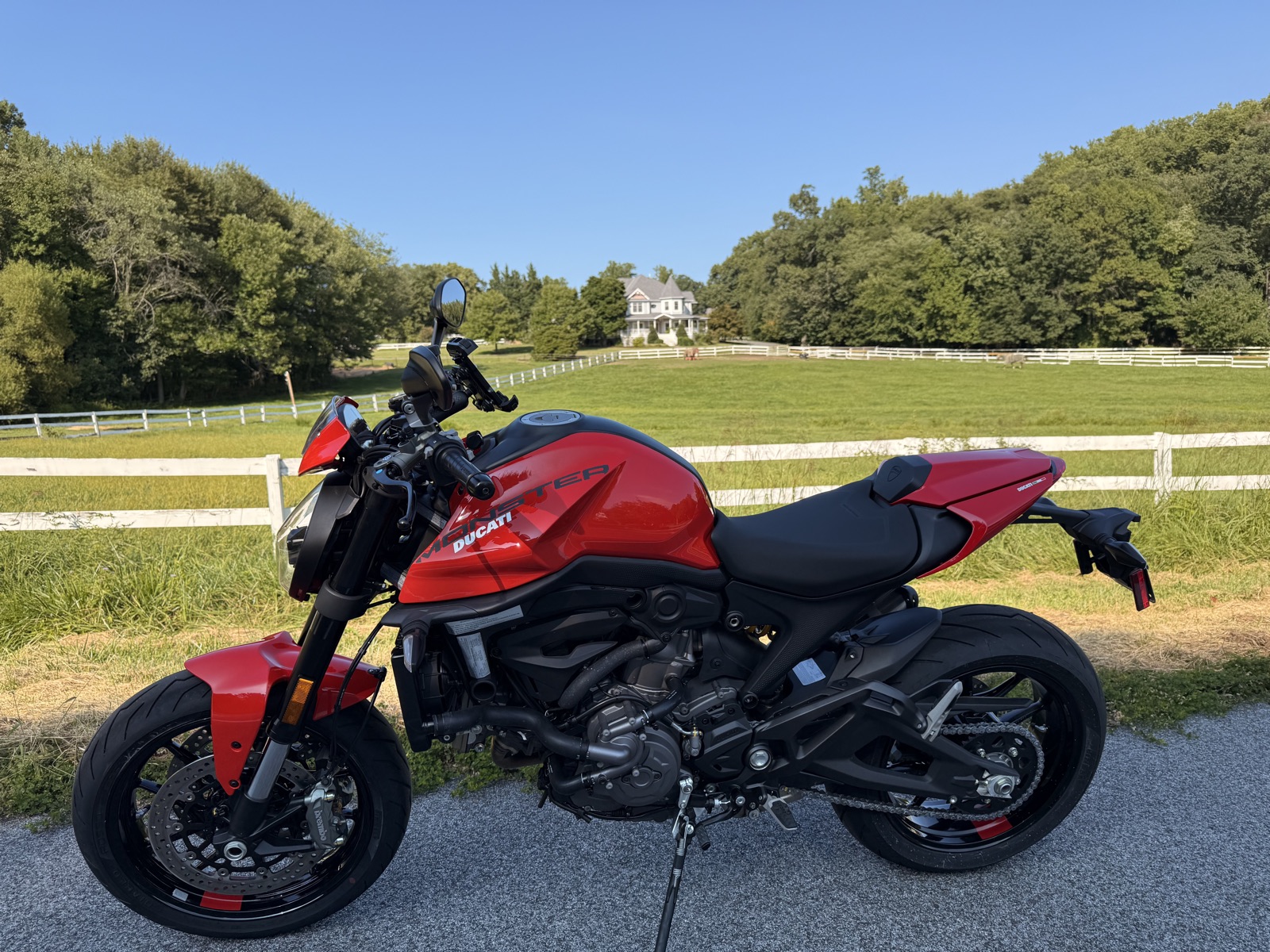
I brought my 2015 Ducati Monster 821 to Bob’s BMW for an ABS and traction-control (DTC) diagnostic. While it was in their care it fell off a service lift from about 3 feet, landed on its right side, petrol tank got damaged, along with the front wheel on the way down plus broken rear break pedal, etc. etc.. The written estimate for the damage came to $7,268.88. I looked at trading the bike instead of repairing it, but the trade number worked out to roughly $3,000 after the dealer’s service and inspection deductions, so I declined, BTW the trade for that bike and blue book is between $5K and $6K. The current path is a dealer-paid repair. This post is a factual record of what happened (happening), what the dealership did well so far, and what I am watching going forward. It is not written to bash anyone but to educate others in similar situation and also to ask for advice.
Update (August 29, 2026): This resolved, and it resolved fairly. I traded the damaged 821 into a brand-new 2026 Ducati Monster+. The full breakdown, including what each side gave up, is in How it resolved at the end.
Why I am writing this
This is a Lessons Learned post. A dealership had my motorcycle, something went wrong, and the people there owned it and started working the problem. That is worth documenting honestly, the good parts and the concerns together.
I am also writing it because I think the most useful thing an owner can do after a service incident is keep a clean, factual record. Memories blur. Paperwork does not. If this account helps another rider ask better questions when it is their bike on the stand, it did its job.
One note on names. The dealership is Bob’s BMW in Maryland, an authorized Ducati dealer. I am naming it because I plan to be public about this and to ask other riders for advice, but I am keeping the staff to first names only. My interest is the facts and the lessons, not putting a target on any one person. The people I dealt with were straight with me.
What happened
I left the Ducati with the dealership for an ABS and traction-control (DTC) diagnostic. While the bike was in the service department, it was damaged in a shop incident.
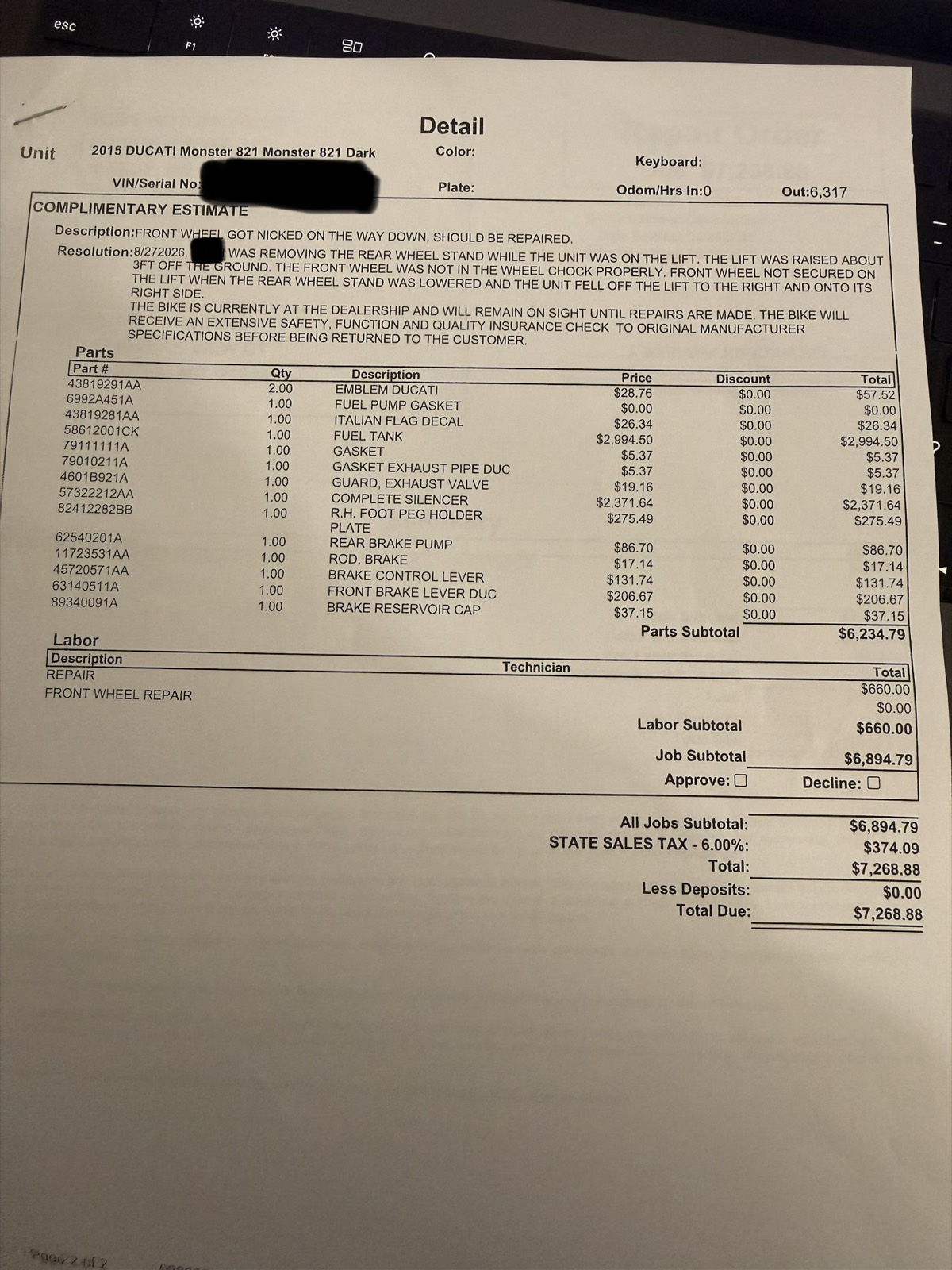
The written incident description records it this way: the rear-wheel stand was being lowered while the lift was about three feet off the ground, the front wheel was not properly seated in the wheel chock and was not secured to the lift, and the motorcycle fell off the lift onto its right side. The paperwork also records that the front wheel was damaged during the fall.
That written account matters. A verbal summary softens and drifts over time. A contemporaneous repair order creates a shared record of the basic facts that both sides agreed to at the time.
The estimate
The dealership prepared a separate repair estimate totaling $7,268.88: $6,234.79 in parts, $660.00 in labor, a $6,894.79 pre-tax subtotal, plus $374.09 in state sales tax.
The larger line items were:
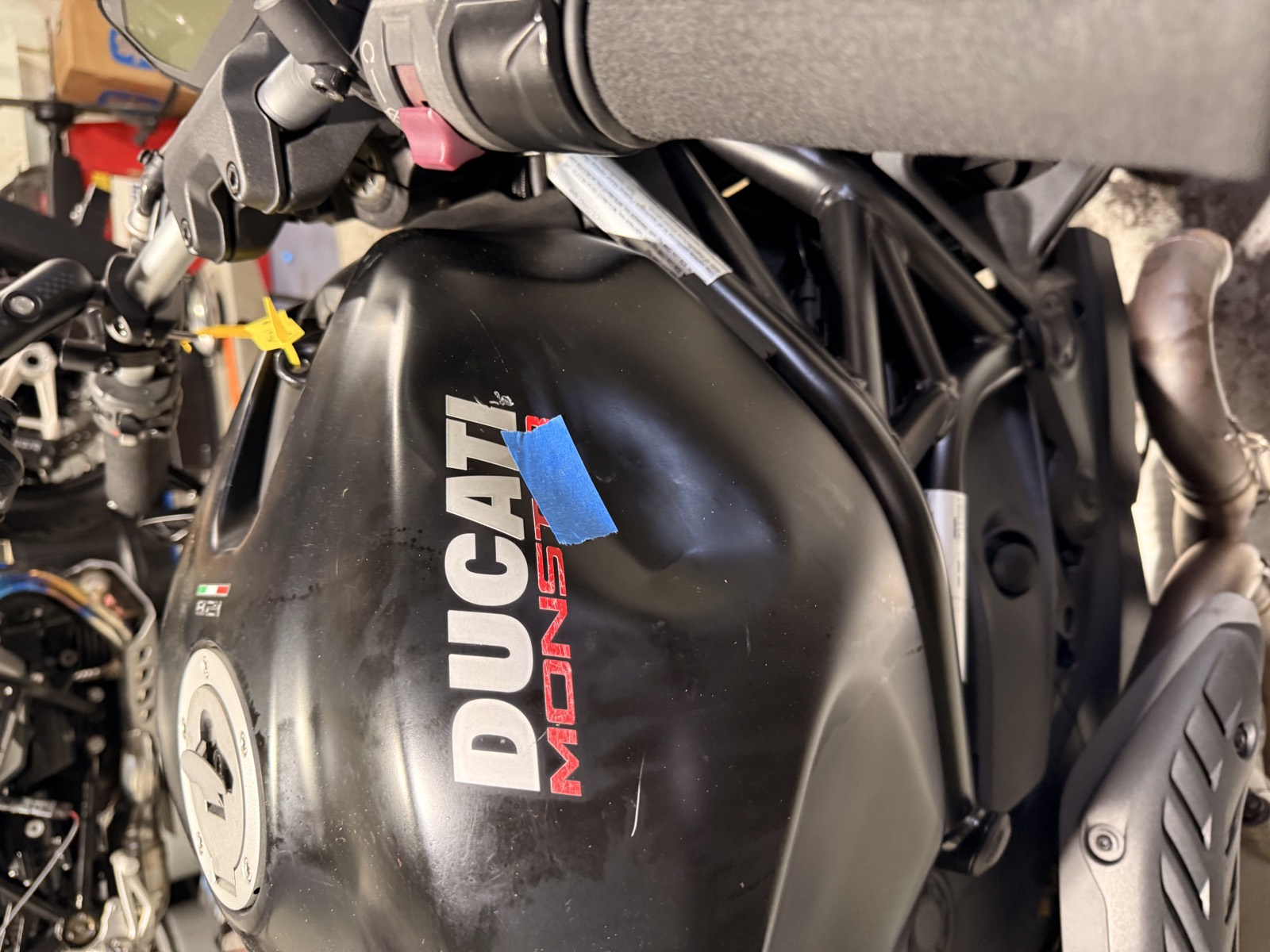
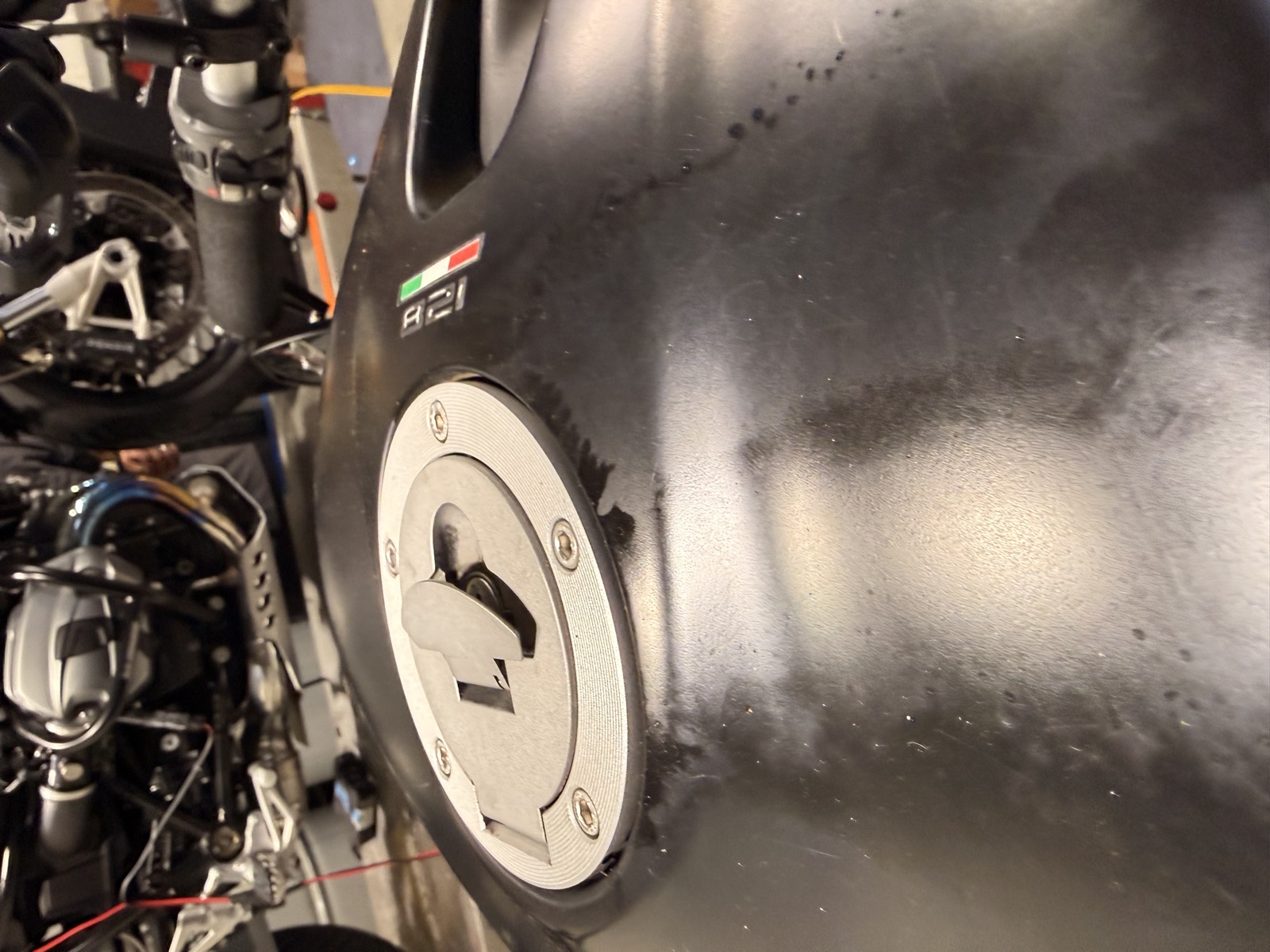
- Fuel tank: $2,994.50
- Complete silencer: $2,371.64
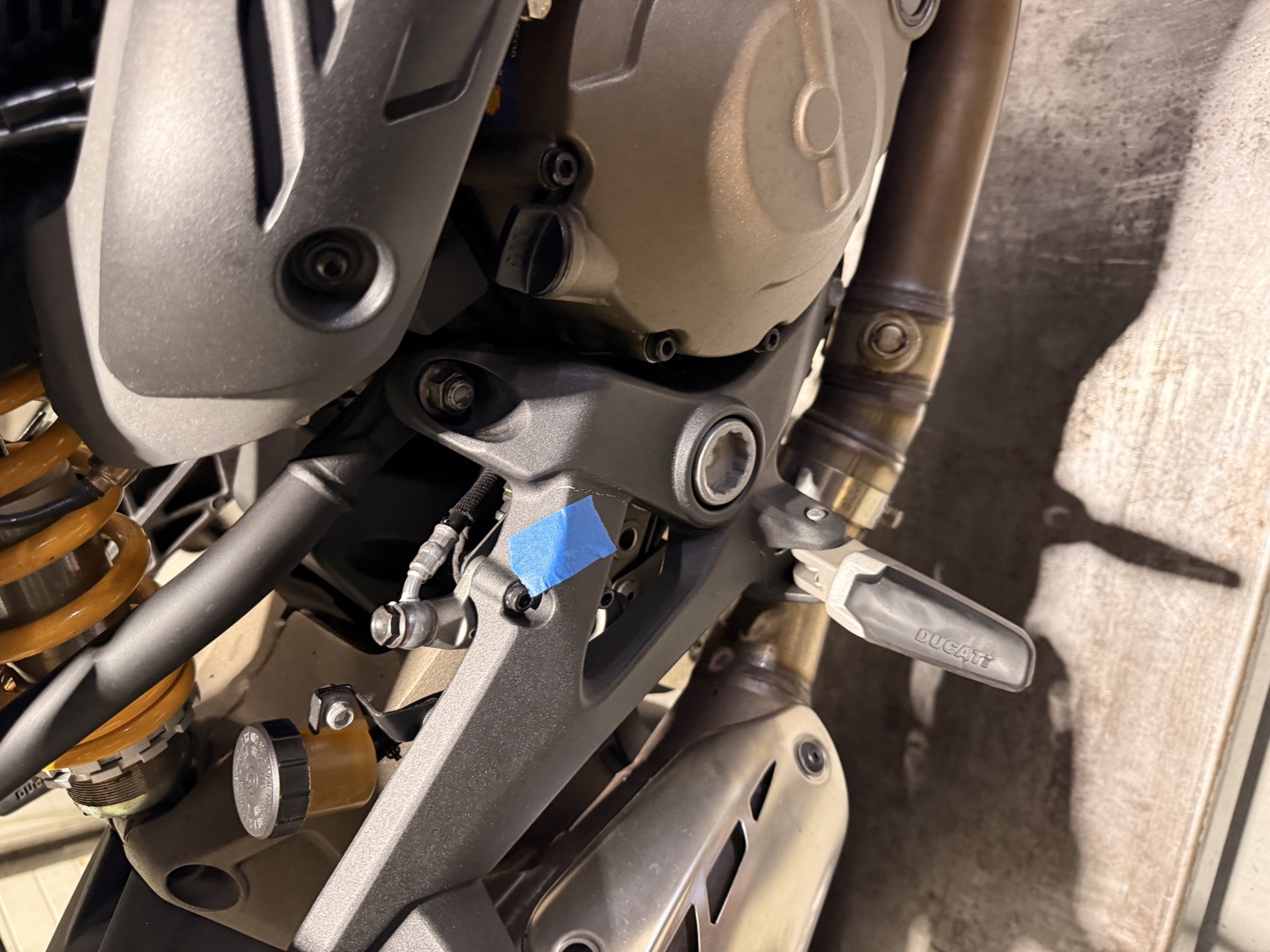
- Right-hand footpeg holder plate
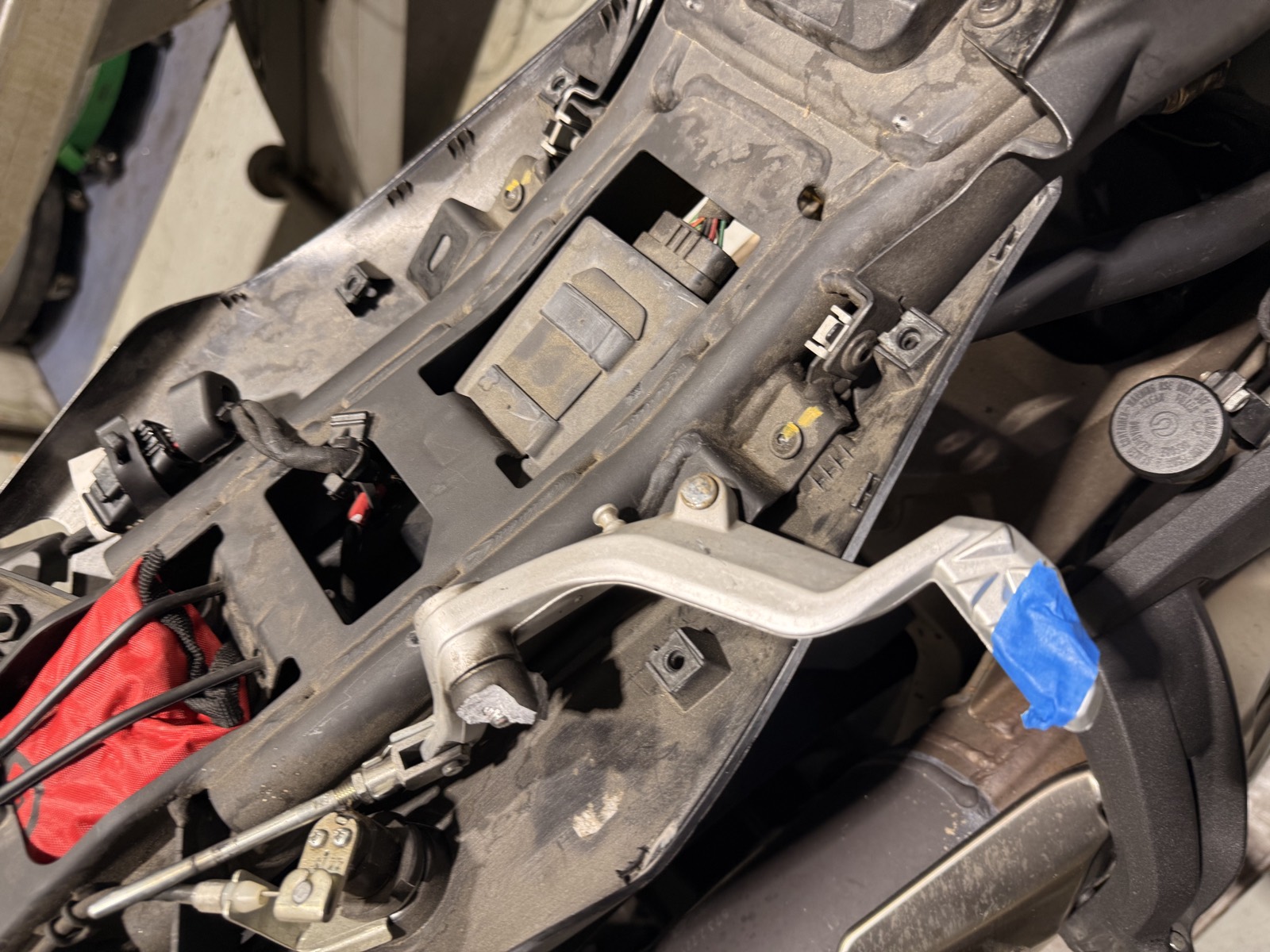
- Rear brake pump and rod
- Brake control lever, and front brake lever
- Brake reservoir cap
- Plus decals, gaskets, hardware, and the other items shown on the estimate
These are the current paperwork figures and could move once teardown and parts availability are clearer.
The trade conversation
Given the size of the estimate and how I felt about the bike after the incident, I asked whether trading it toward another motorcycle might be a cleaner resolution.
The trade number that came back was roughly $3,000 after the dealer’s service and inspection deductions. I pushed back on applying those deductions in this specific situation, and the dealer explained that these are costs it applies to its used inventory. We got to the point pretty quickly where it was clear the numbers would not work for me.
Todd, the sales manager, was professional throughout. He was representing the dealership in a sales negotiation, and I understood he was not going to structure a deal at a loss. At the same time, I was not interested in stepping up to a more expensive bike and negotiating backward from there. I declined and left without a deal. That did not change the repair responsibility already on the table.
How the dealership responded
There are real concerns in this story, and I will get to them, but it is only fair to record what the staff did well after the incident.
Chris, the service manager, was helpful, cordial, upfront, apologetic, and courteous. He walked me through the repair process and the parts situation directly. Dave, my service rep and the person who took the bike in, was also apologetic. Todd was professional during a trade conversation that simply did not work out.
The dealership documented the incident in writing, produced an itemized estimate, revised the paperwork to add a safety and quality-assurance commitment, and is working a repair plan. Those are meaningful, and they belong in the record right next to my concerns.
The damage, up close
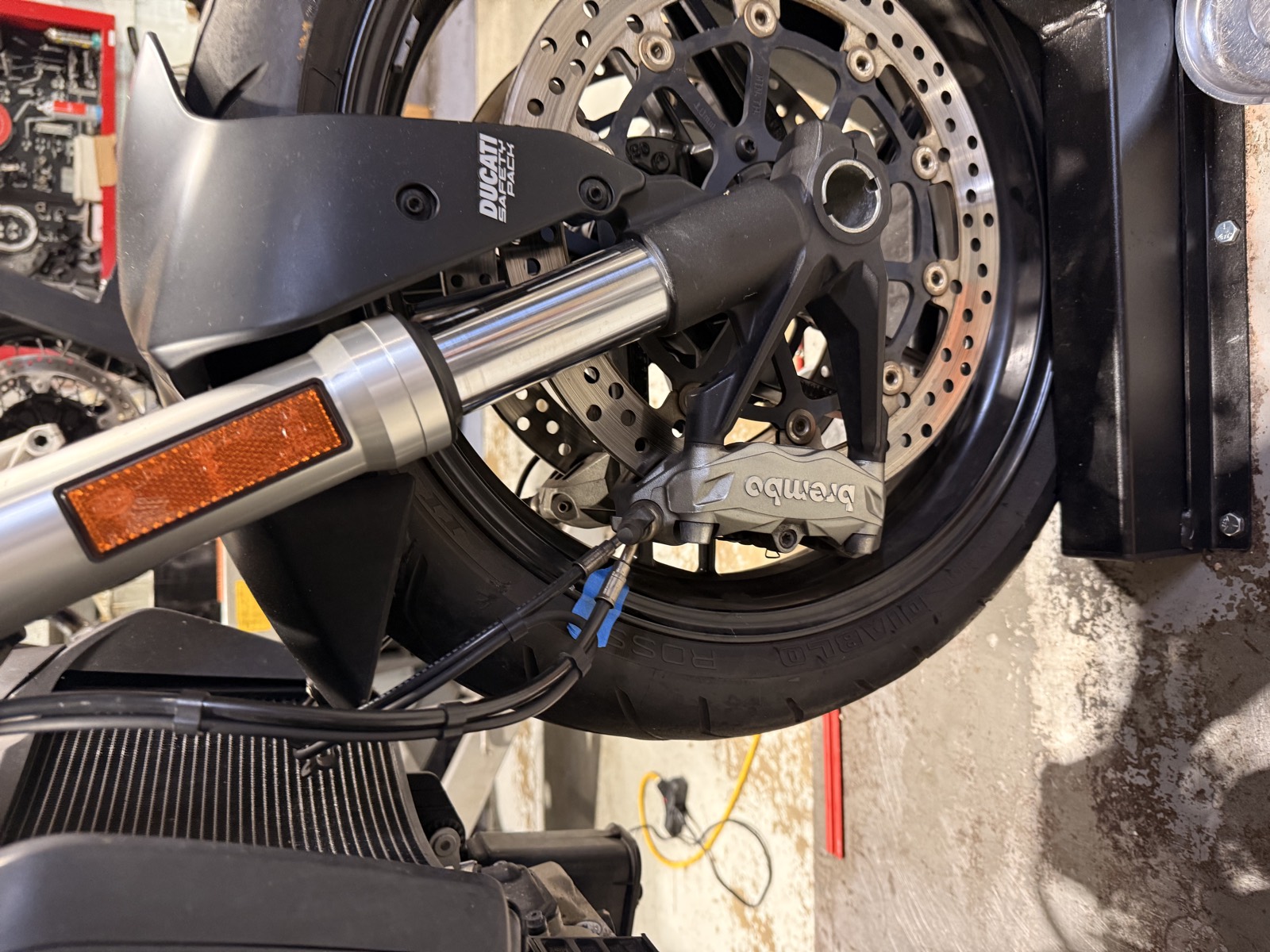
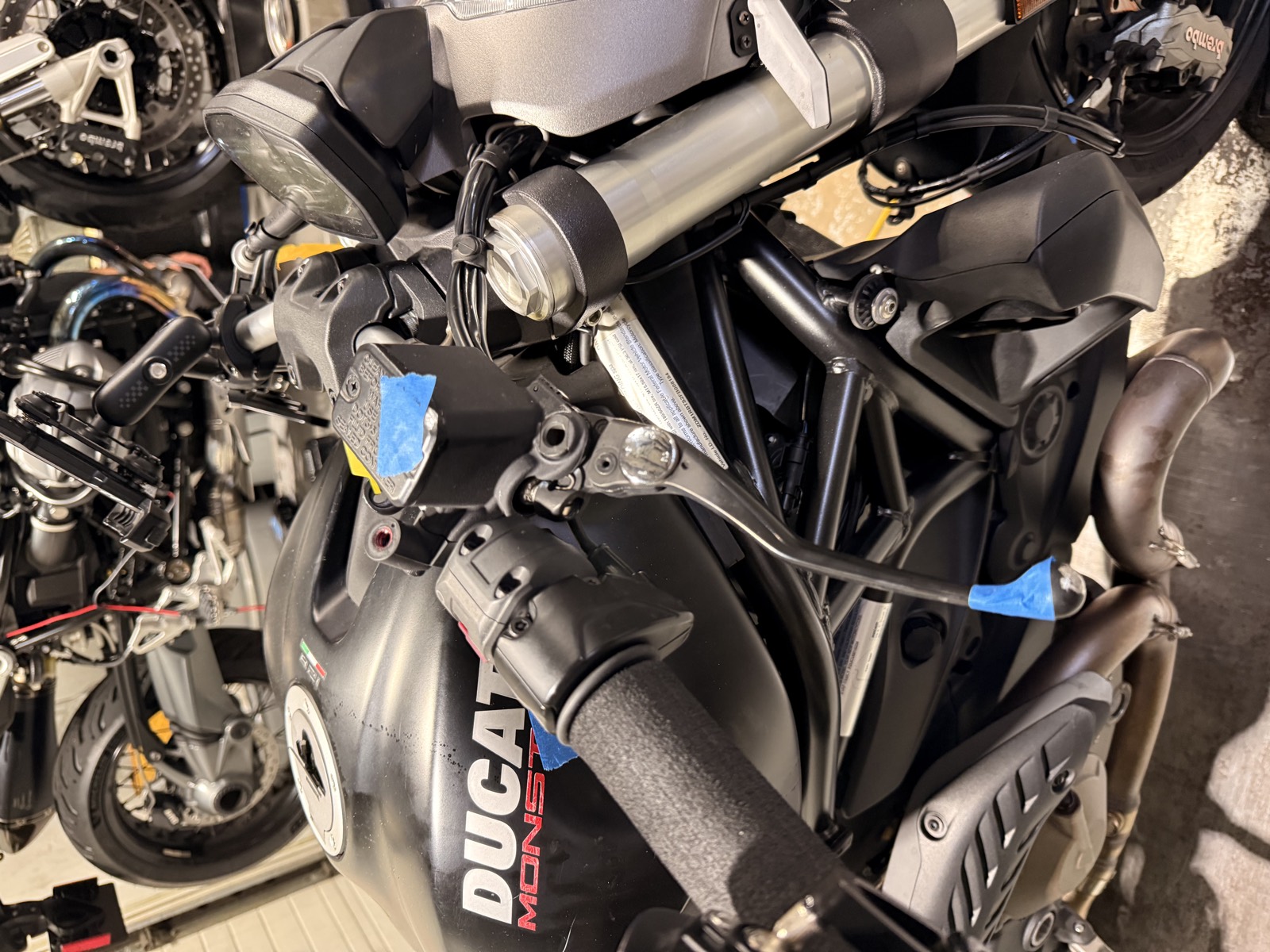
Here is what I documented before any repairs began. The blue painter’s tape marks the areas the shop flagged. Tap any photo to open the full-size version.
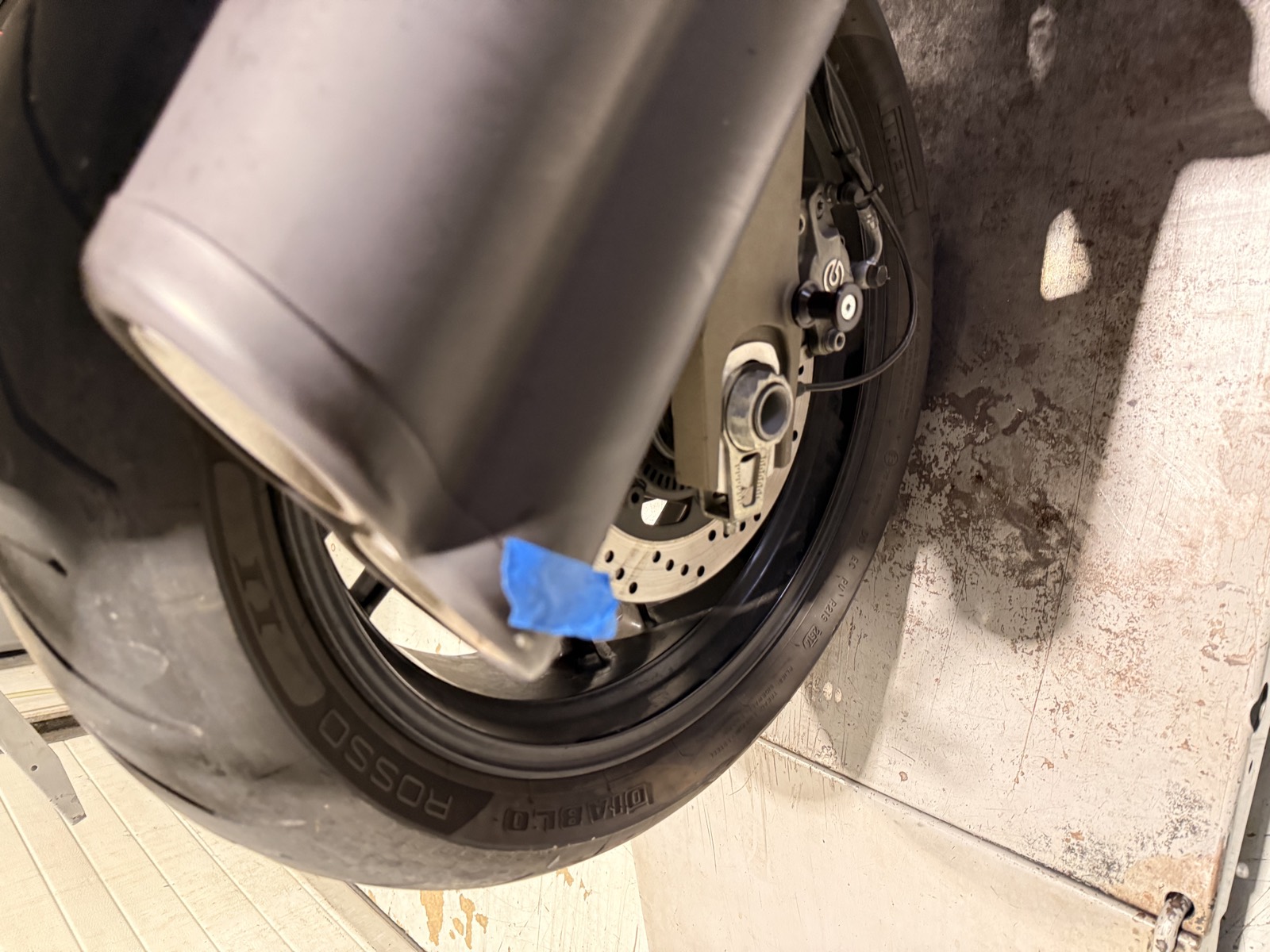
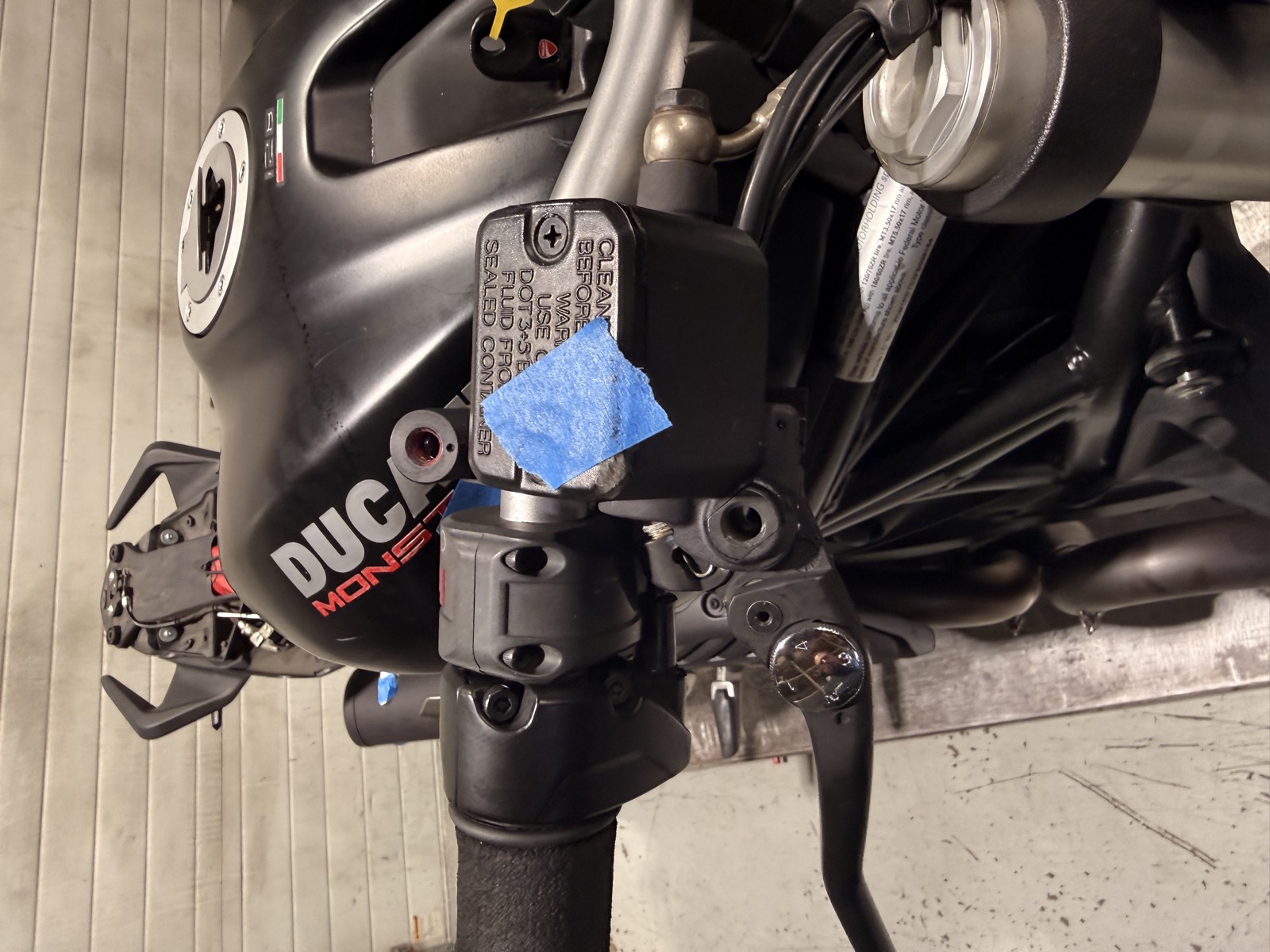
What went well
- The dealership created a written account of how the motorcycle fell.
- The damage and initial scope were itemized, not handled with verbal assurances.
- The revised paperwork adds an extensive safety, function, and quality-assurance check to original manufacturer specifications.
- Chris communicated directly and treated the situation seriously.
- Dave apologized for what happened.
- The trade conversation stayed professional and ended without pressure to accept terms that did not work for me.
- The bike stays at the dealership while the repairs are handled.
What concerned me
My concerns are safety, parts availability, repair quality, documentation, and the bike’s condition and value after a major shop incident.
The front wheel is the big one. It is a safety-critical component, and it was damaged in a fall from about three feet. The plan is to send it out for repair, and I want the completed work and inspection results documented. The question is not whether the wheel can be made to look right. It is whether it meets the dimensional, structural, and manufacturer specifications after the work.
The fuel tank is the other major item. The plan is to repair or replace it, and either way the stated goal is OEM specification. I want the final method and result written down.
I am also aware that a recorded incident and an extensive repair can change how I feel about the bike, and how a future buyer looks at it. Whether there is legally compensable “diminished value” is a separate question that depends on the facts and the applicable law, and I am not presenting it here as a settled claim.
And the gap between an estimate over $7,200 and a proposed trade value around $3,000 was simply too wide for the trade to make sense, especially after the service and inspection deductions.
The current repair plan
As Chris laid it out, the steps are:
- Source official Ducati parts where available. Parts coming from Italy are expected to take about 7 to 10 days after ordering, though availability and delivery can change.
- Handle unavailable, age-related parts appropriately. If a part is no longer available because of the bike’s age, the dealership will identify an OEM-equivalent or otherwise appropriate replacement and document what is used. (I will confirm the exact wording with Chris.)
- Send the front wheel to a specialist. I will ask for documentation of the work and the post-repair measurements or inspection showing it meets spec.
- Repair or replace the fuel tank to OEM specification.
- Complete the remaining estimated repairs, including the silencer, controls, brackets, and hardware, adjusted as needed after teardown.
- Perform the promised final checks, the extensive safety, function, and quality-assurance inspection to manufacturer specifications, before the bike comes back to me.
- Provide final records: the final repair order, parts list, outside-vendor reports, measurement results, warranty information, and confirmation of the completed safety inspection.
This is the current plan, not a finished outcome. I will update it if the scope, parts choices, schedule, or inspection findings change.
Lessons for other riders
Get the incident description in writing. Ask for a plain account: how far it fell, how it was secured, which side took the impact, and what struck what.
Photograph everything before repairs begin. Wide shots, close-ups, and a full walk-around. Keep the original files and metadata. Video is useful even if you never publish it.
Separate cosmetic questions from safety questions. A scratch and a potentially compromised wheel are not the same kind of problem. For safety-critical parts, ask what standard applies, who inspects or repairs it, what gets measured, and what documentation you will receive.
Preserve every version of the paperwork. The original estimate, revised repair orders, texts, emails, photos, and notes. Do not let the dealership be the only keeper of the record.
Write down verbal commitments promptly. After an important conversation, make a dated note or send a calm follow-up email summarizing what you understood, and give the other side a chance to correct anything.
Evaluate a trade separately from the repair obligation. Convenience does not automatically make the numbers fair. Ask for the gross trade value and every deduction in writing, then compare the trade against the repair path on its own merits.
Stay factual, and leave room for the final outcome. The incident matters, and so does the response. Document both, and avoid presenting unresolved safety, value, insurance, or legal questions as settled facts.
Where things stand now
Update, August 29, 2026: this resolved with a fair trade into a new 2026 Monster+. See How it resolved below. I am leaving the original account below intact as the contemporaneous record.
As of August 28, 2026, I had declined the trade because the numbers did not work for me, and the current path is a dealer-paid repair. After I got home, Todd, the sales manager, followed up by email. I am not going to post the message here, but it tells me the trade conversation is seemingly still in play, and they may be going through the motions of a negotiation. The Ducati is with the dealership while that plays out.
Chris is checking availability of official Ducati parts, with the ones from Italy estimated at 7 to 10 days after ordering. The wheel is expected to go to an outside specialist, and the tank will be repaired or replaced with the goal of meeting OEM specifications. The written commitment to an extensive safety, function, and quality-assurance check is an important part of the resolution.
I appreciate the professionalism and the apologies from Chris and Dave, and the professional way Todd handled a trade conversation that did not work out. I will keep documenting the repair carefully because of the height of the fall, the wheel involvement, the size of the estimate, and, most of all, the importance of knowing the bike is safe and properly restored.
I will update this post when I have confirmed parts availability, the final wheel and tank decisions, the completed repair records, and the results of the dealership’s final inspection.
How it resolved
Update, August 29, 2026. It worked out, and it worked out fairly.
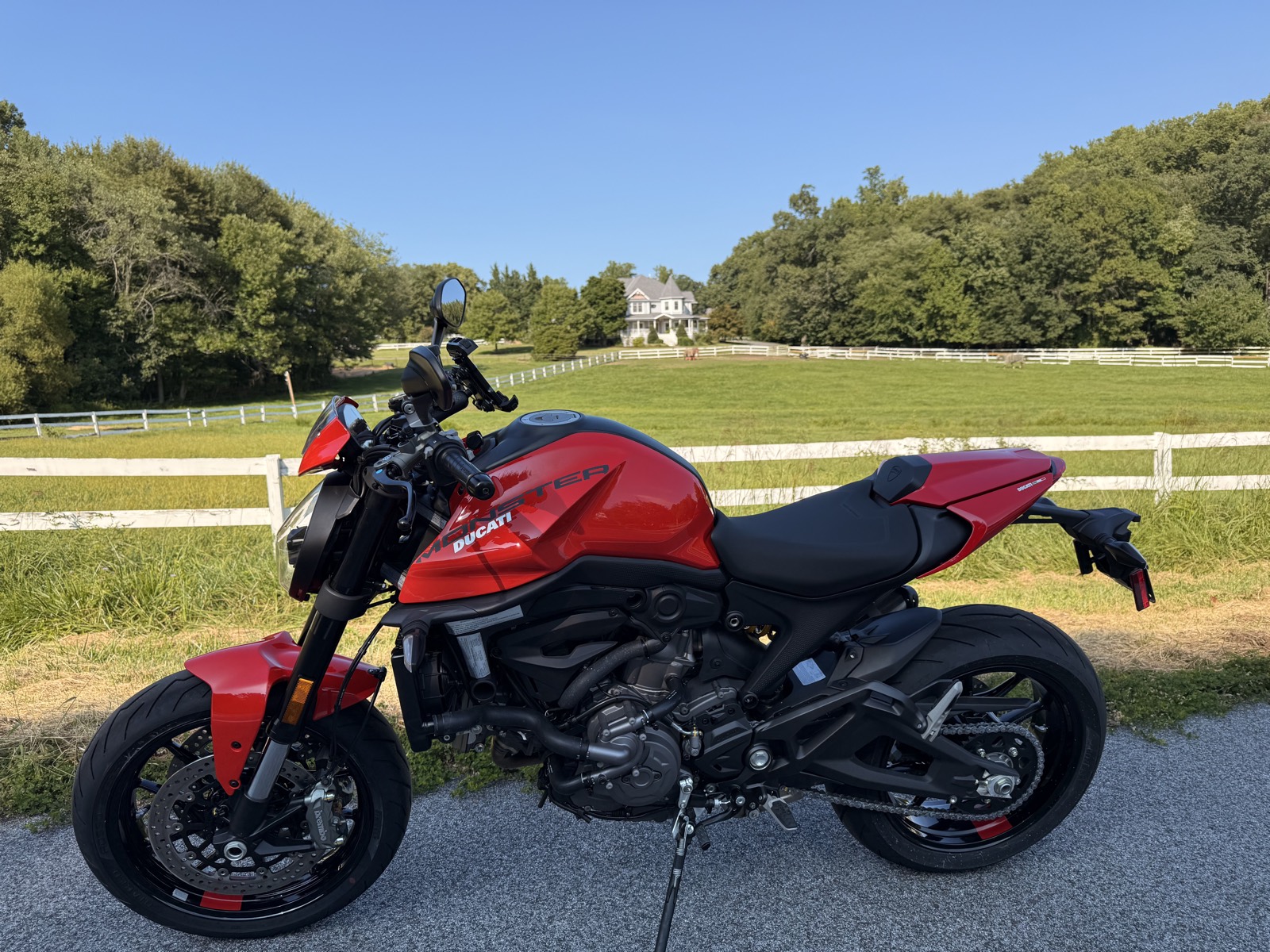
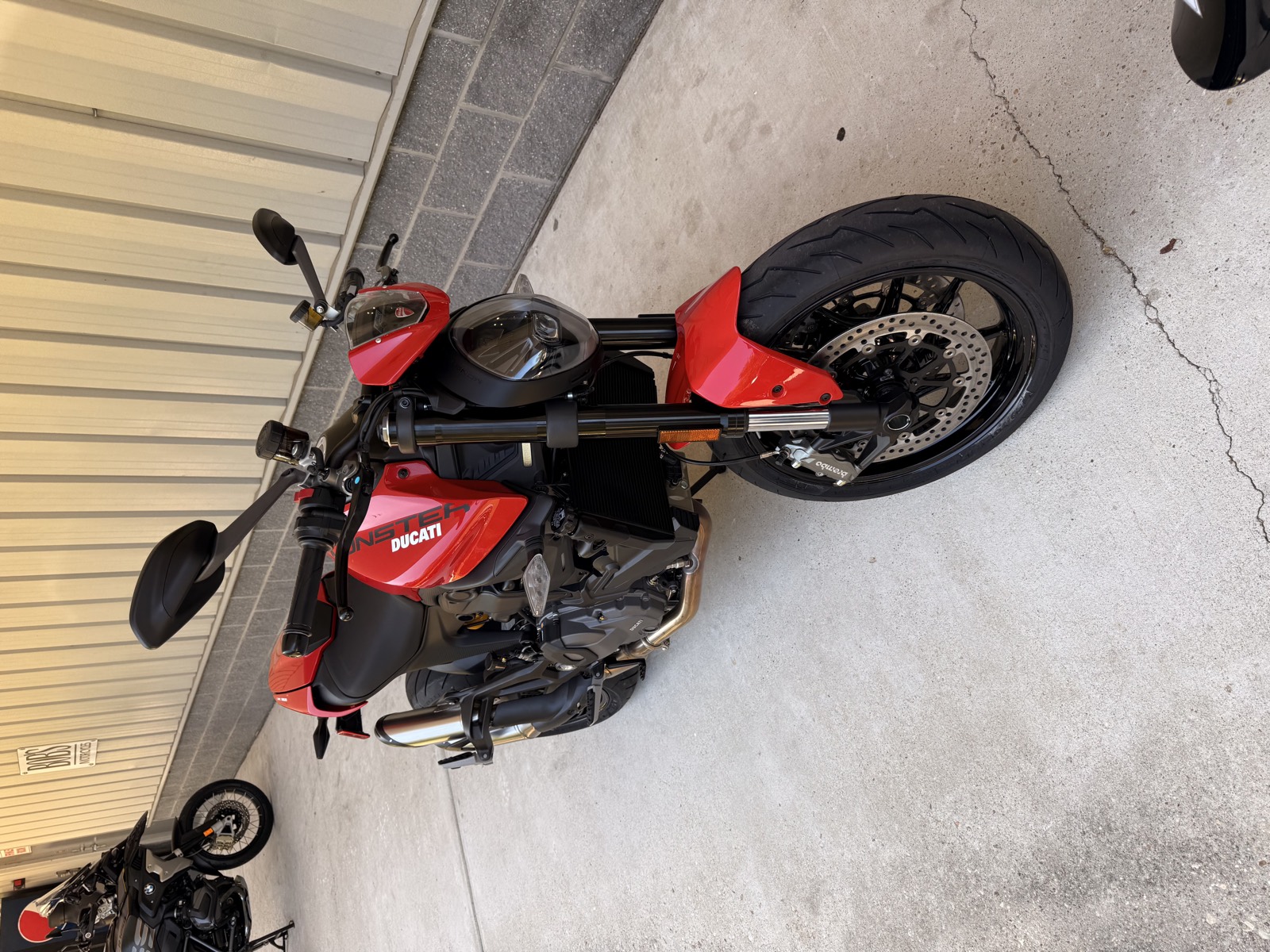
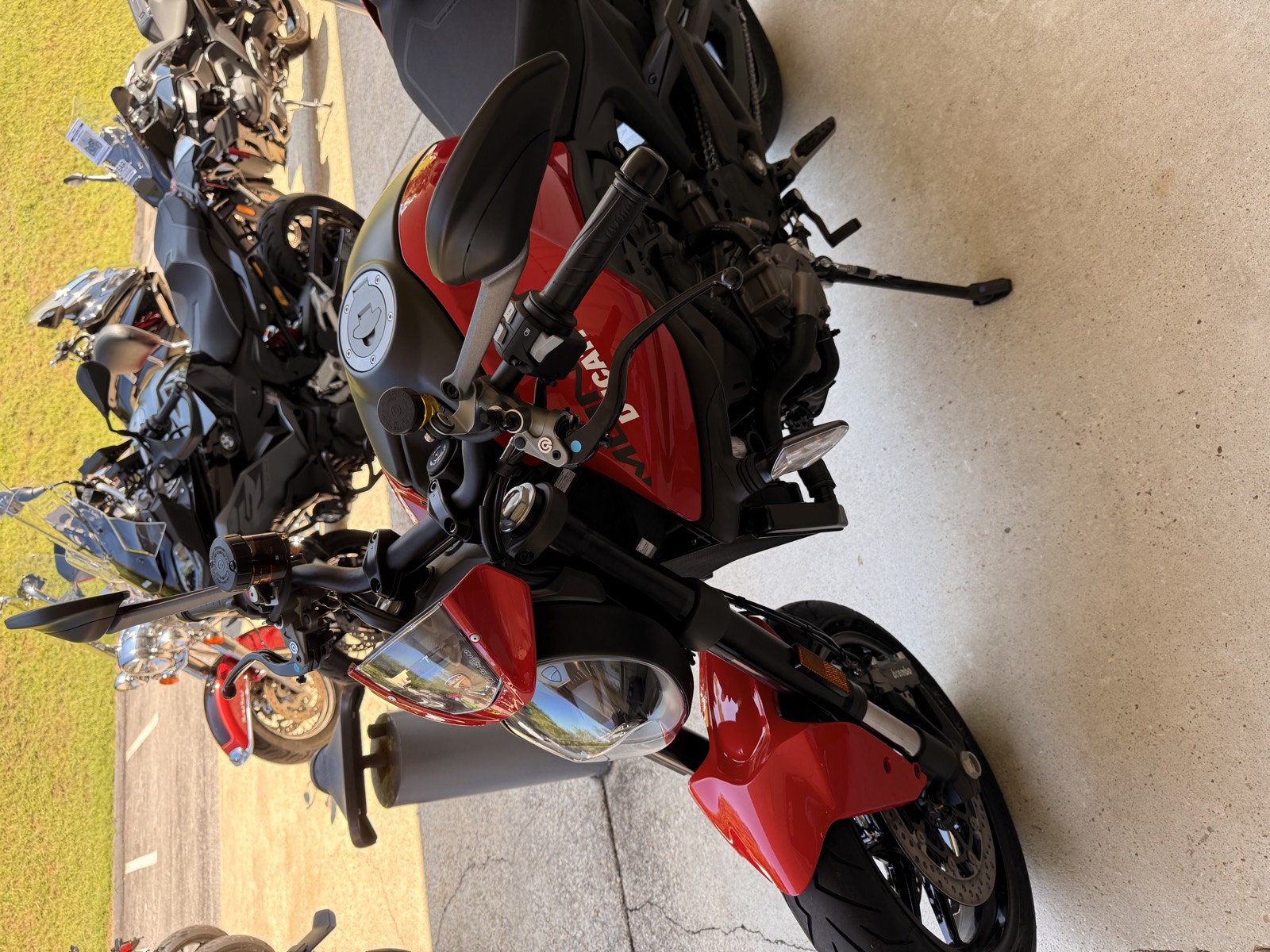
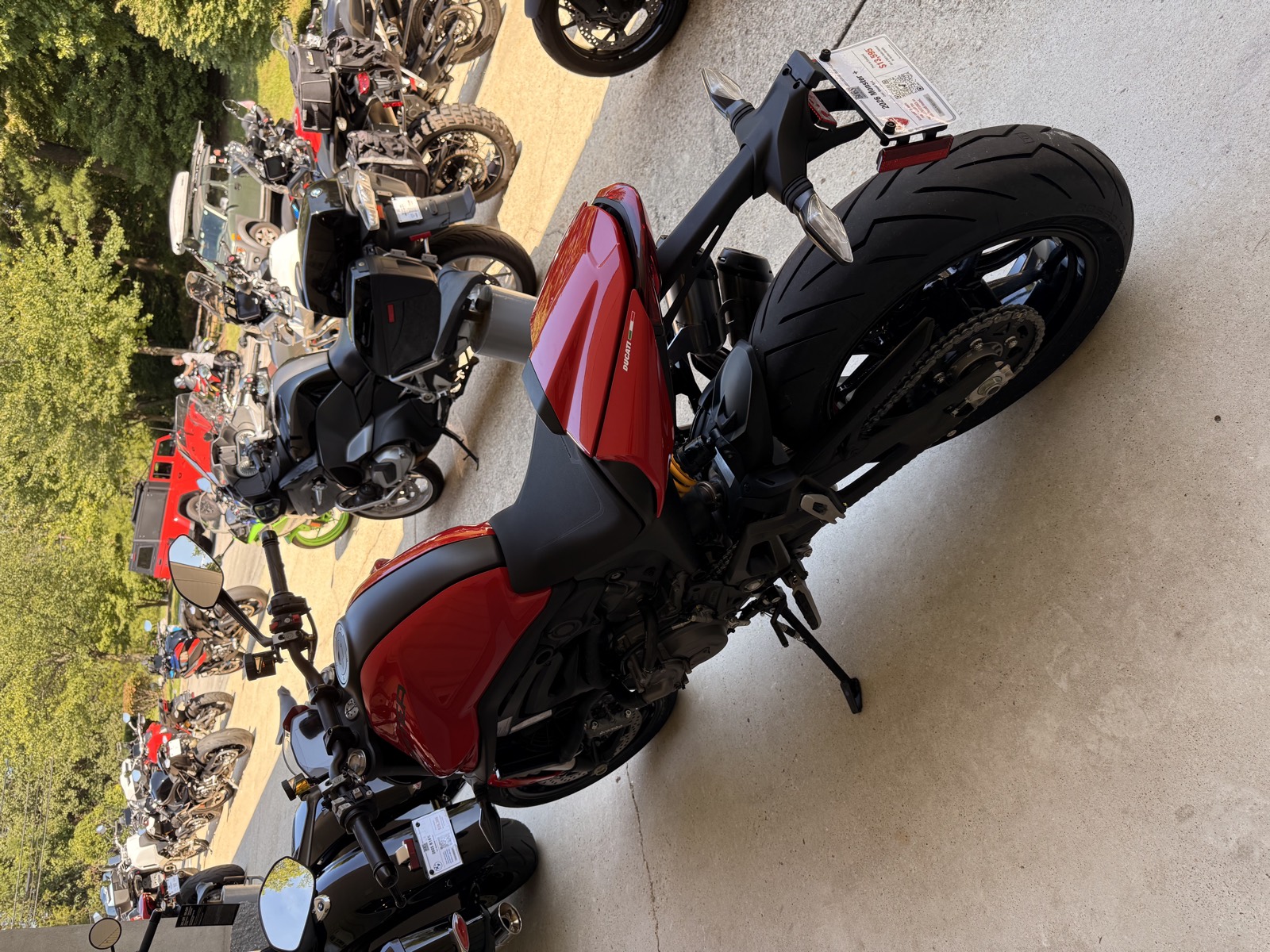
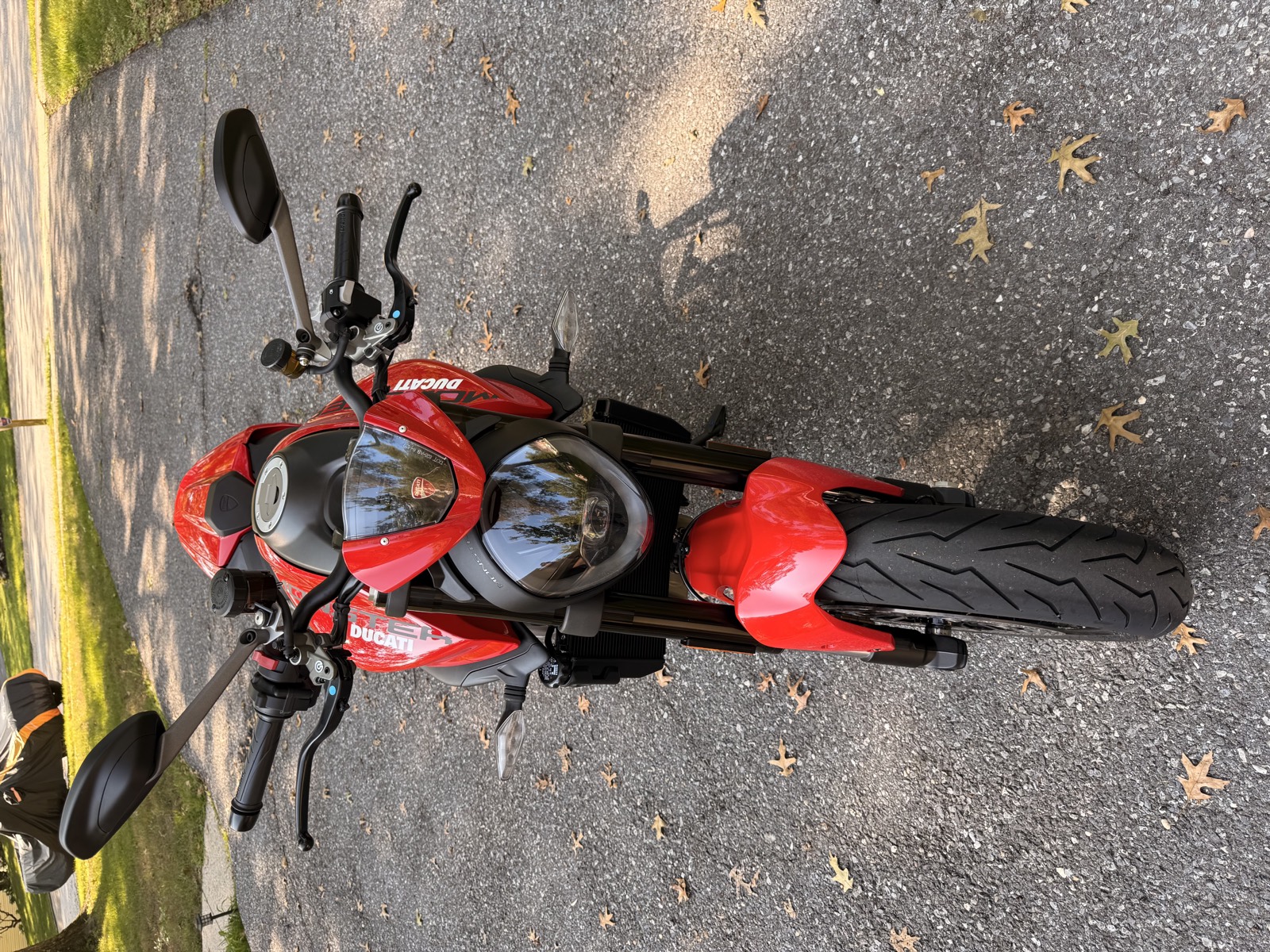
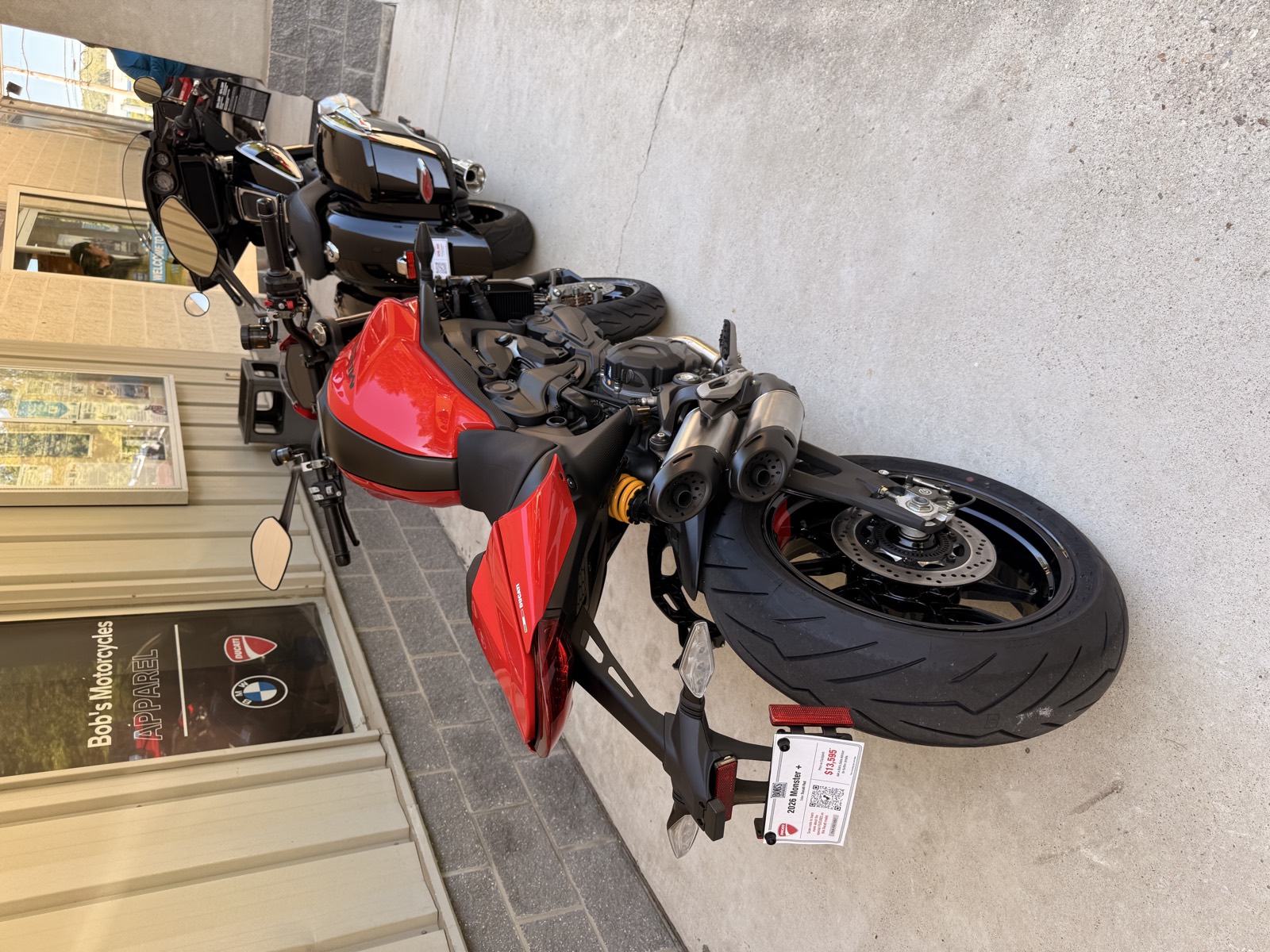
After the Friday conversation, the team went back and revisited the numbers. On Saturday, Todd, the sales manager, called with a real offer, and I closed the final deal with Joe, the general manager, who was genuinely good to work with. We landed on a trade: my damaged 2015 Monster 821 toward a 2026 Ducati Monster+, the 937 Plus, powered by Ducati’s 937 cc Testastretta V-twin (about 111 hp).
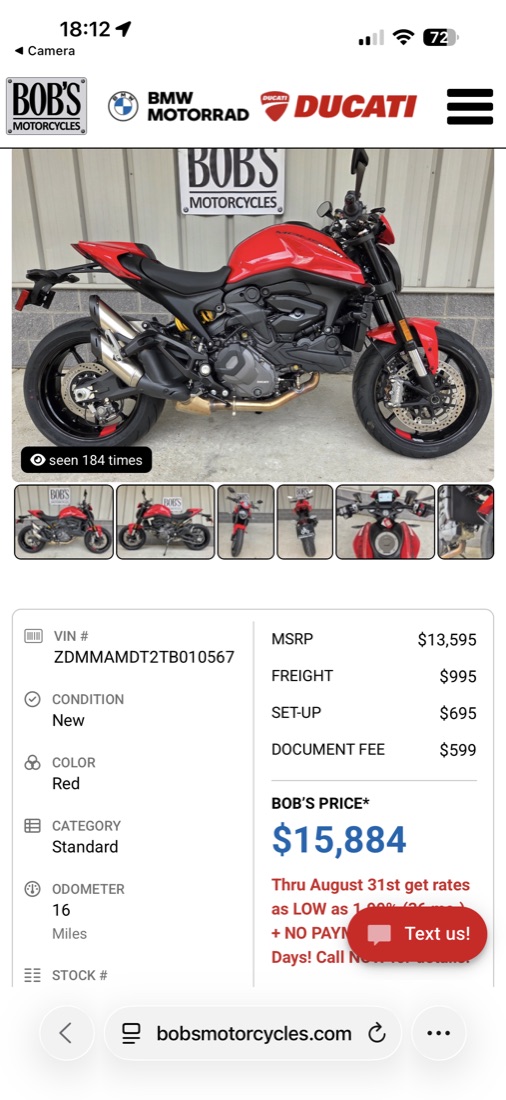
Here is the math, because I said from the start I would keep this transparent. Bob’s publishes its own transparency pricing on every bike, so the starting numbers on the new Monster+ are not my estimate, they are the dealership’s own published figures:
- Bob’s advertised, all in: $15,884 before tax (MSRP $13,595, plus $995 freight, $695 set-up, and a $599 documentation fee).
- They waived the $695 set-up fee entirely.
- They could not delete the $599 documentation fee for legal reasons, so they discounted the bike by the same $599 to cancel it out. It nets to zero.
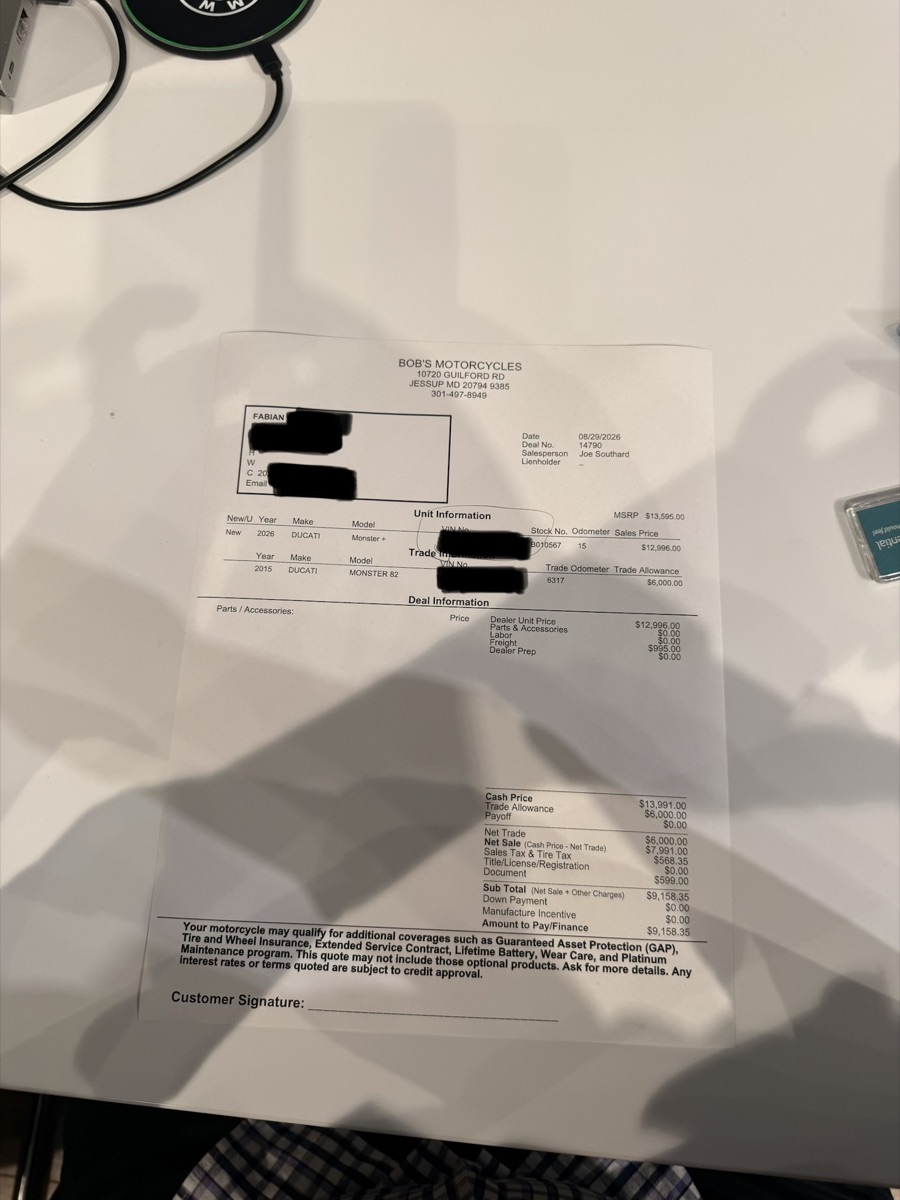
- Bike plus freight came to $13,991 on the deal sheet (a $12,996 sale price after that discount, plus the $995 freight I chose to keep in to be fair).
- Trade allowance for my damaged 821: $6,000. That is full market value (KBB was about $5,900), with none of the used-inventory deductions that had dragged the first trade number down near $3,000.
- That left a net sale of $7,991.
- Then Maryland sales and tire tax of $568.35, plus the $599 documentation fee.
- Amount to pay, out the door, everything included: $9,158.35.
Bob’s own published pricing on the same bike is the proof of what they gave up:
So I paid $9,158.35, everything included, to move off a damaged ten-year-old bike and onto a brand-new one with a full warranty.
Neither side “won,” and neither side lost, which is the right outcome for something that began as an accident. The dealership put real money on the table: a full-market trade on a bike they damaged, plus the set-up and documentation fees off their own published price. I put in my own money and kept the freight in the deal.
And this was not a consolation prize, it genuinely made sense for me. My 821 had its Desmo valve service coming due in about another 2,000 miles, it needed a fresh set of tires, and it had come into the shop for a speed-sensor diagnostic in the first place. Trading shed all of that and reset the clock on a brand-new bike with a full warranty.
I also owe a thank-you to the r/Ducati community. A thread full of riders helped me think clearly about replacement cost versus trade-in value, about insisting on the front wheel, and about the simple point that a shop already committed to a $7,000 repair has every reason to make a fair trade instead. That framing is a big part of how this landed where it did.
The new bike
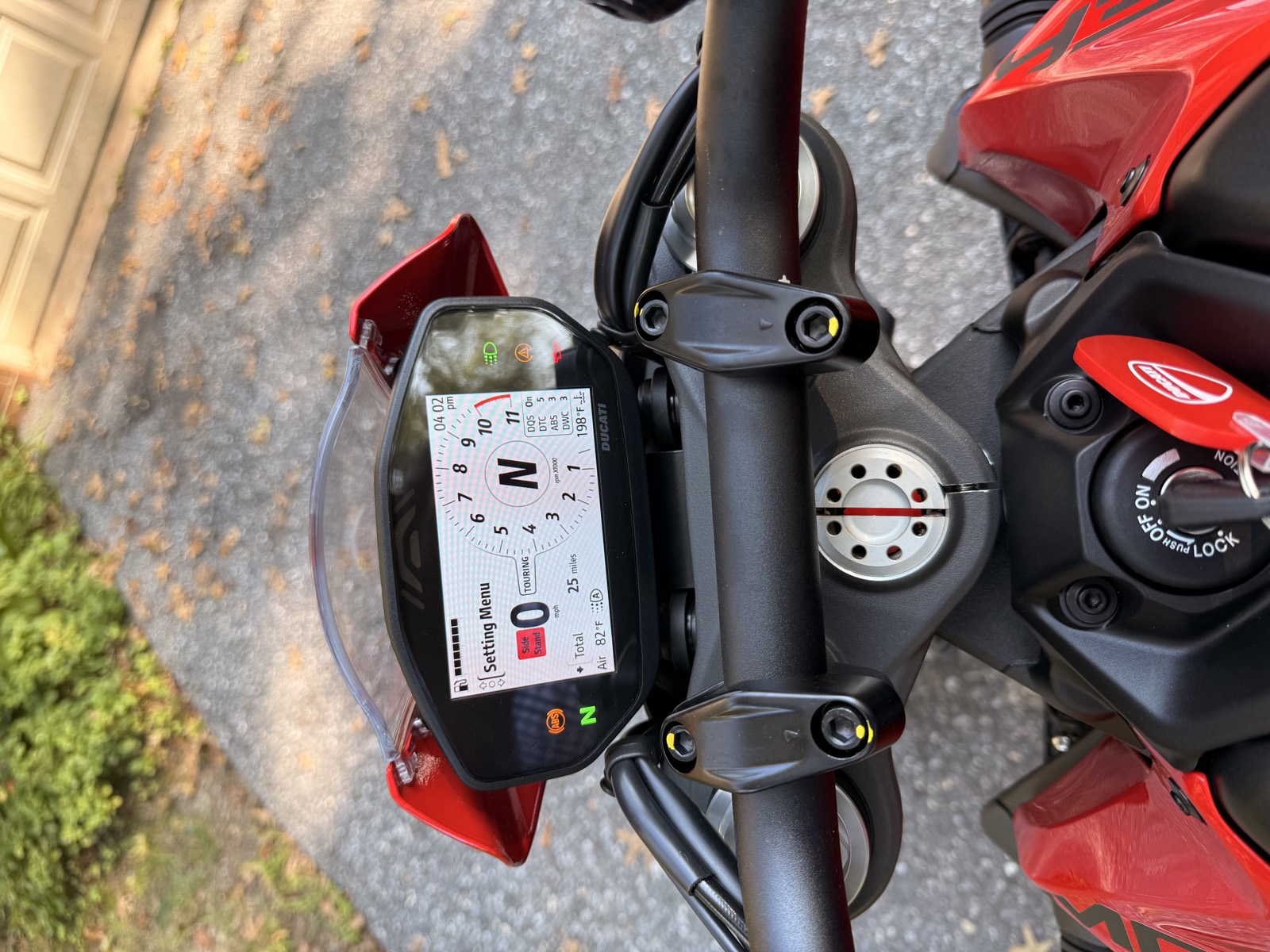
The new 2026 Ducati Monster+, picked up at Bob’s. Tap any photo to open the full-size version.
First ride
I put about 50 miles on it today, and I will say this plainly: after an hour in the saddle, this is genuinely a superior bike.
I still love love love my 821. It was more aggressive, it made you pay attention, and that is exactly what I loved about it. But even riding gently, on brand-new tires that are not scrubbed in yet (so no real leaning into the twisties yet) and keeping the revs under 6,500 to respect the break-in ahead of its first service at 621 miles, I already feel completely comfortable on it. That is all in Touring mode, on day one. I cannot wait to scrub the tires in and switch it over to Sport mode.
Update log
- August 28, 2026: Initial account. The bike remains at the dealership pending parts sourcing and repair.
- August 28, 2026: After I got home, the sales manager followed up by email. The trade conversation seems to still be in motion.
- August 29, 2026: Resolved. The dealership revised its numbers, Todd called with a real offer, and I closed with the GM, Joe. I traded the damaged 821 into a brand-new 2026 Ducati Monster+ at about $9,158 out the door, freight and doc and tax included, on a full-market $6,000 trade plus the set-up and doc fees waived off their own published price. Details in the “How it resolved” section above.